_edited.jpg)

Why?
Box beams are not decoration. They are an architectural decision. Where a flat ceiling delivers a finished surface, a box beam delivers presence — depth, line, shadow, and the sense that a room was designed rather than built. Learn what box beams actually do for a space, where they belong, and why a single architectural detail can transform how a home reads.
Architectural Impact
A flat ceiling reads as a ceiling. A ceiling with box beams reads as architecture.
That sounds like a small distinction. In a finished room, it isn't. Box beams introduce shadow, line weight, and rhythm to a surface that otherwise has none. They give the eye something to follow. They scale a room down — or up — depending on placement and spacing. They turn a builder-grade ceiling into something a designer would recognize.
For homes with cathedral or vaulted ceilings, box beams resolve a common problem: too much white space overhead. The beams break the volume into proportional sections without lowering the ceiling. For standard eight- or nine-foot ceilings, a single beam down the center of a room — or along a kitchen-to-living transition — defines the space without crowding it.
The room does not change. The way the room reads changes completely.

Not every room needs a beam. The rooms that benefit most are the ones where the ceiling is doing too little — where the architecture stops at the wall and the upper third of the room reads as empty.
A few of the most common applications:
Where Box Beams Belong


.jpg)

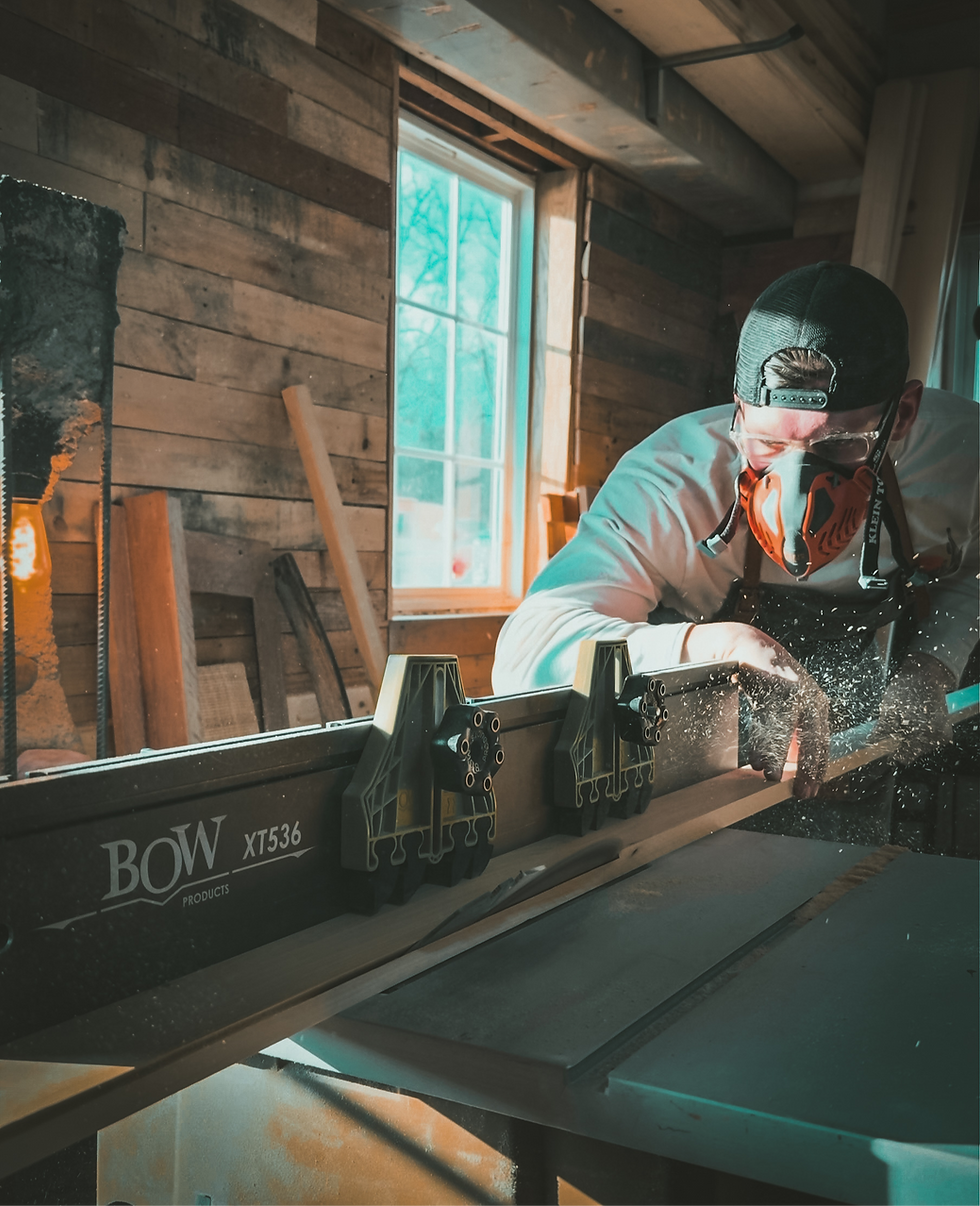
Why We Build With Real Wood
A box beam is a long-term architectural element, not a short-term finish. We build ours from real lumber for one reason: it's the only material that gets better with age.
Real wood develops patina. UV light slowly deepens the color. Air oxidation softens the contrast. Hand-touched surfaces — a doorway, a mantel edge — wear smooth in the spots people actually touch. The beam stops looking like something that was installed and starts looking like something that was always there.
White oak deepens from honey to caramel. Walnut warms slightly and develops contrast in the grain. Cedar exterior beams silver gracefully when left unfinished. Distressed finishes ease into their tool marks rather than cracking around them.
That aging is the reason real wood floors, paneling, and timber framing have stayed in demand for centuries. A box beam does the same thing on a smaller, more accessible scale — and your room benefits from it every year you live in it.
Frequently asked questions
Ready to Plan Your Box Beams?
